Bedding Guide
Inside a Down Comforter: Fill Power, Stitching, and Seasonal Warmth
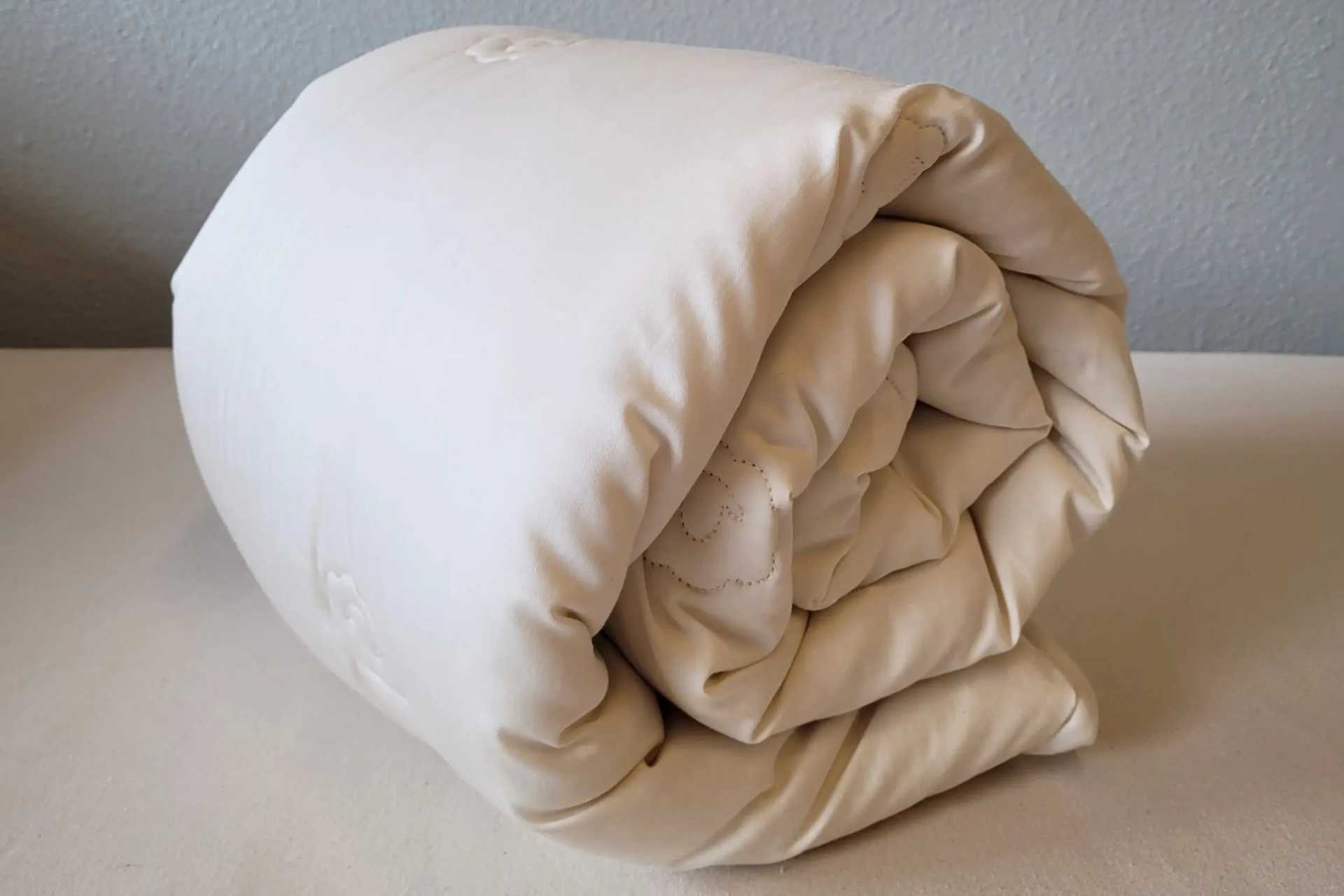
Two comforters can look nearly identical folded at the foot of a bed and behave quite differently once the room goes dark. One may feel lofty but light; another, dense and warmly reassuring. The difference is not a mystery of taste alone. It is written into the fill, the amount of it, the way it is held in place, and the climate in which it is asked to work.
Down bedding invites a particular kind of confidence. It looks soft, seems simple, and promises the appealing sensation of being covered without being weighed down. Yet the word “down” tells only part of the story. A comforter’s warmth depends on the interaction of its fill power and fill weight, while its construction determines whether that insulation stays evenly distributed. Shell fabric, room temperature, sleep habits, and care instructions all matter, too.
Understanding these details need not turn a bedtime decision into a laboratory exercise. A few distinctions can make product descriptions legible and help narrow the field. The central question is not which comforter has the biggest number, but which combination of loft, insulation, weight, and construction suits the sleeper and the room.
What down is—and what it is not
Down is the soft, three-dimensional undercoating found beneath the tougher outer feathers of waterfowl. Instead of a central quill, a down cluster has a light, branching structure that traps air. The trapped air slows the movement of heat away from the body. In practical terms, that means down can provide meaningful insulation without requiring a heavy layer of material.
Feathers may also appear in bedding fills, but they are structurally different: they have a central shaft and tend to feel firmer. A fill can contain down, feathers, or a blend, and the label should identify the composition. For shoppers comparing comforters, the distinction is more than vocabulary. A higher proportion of down generally contributes to a softer, loftier feel, while feather content can affect weight, texture, and price.
“Down alternative” is a separate category, usually made with synthetic fibers designed to imitate some of down’s lightness or loft. It should not be confused with natural down, and its performance depends on the particular fiber and construction. Neither category is automatically right for everyone. The useful comparison is between products with clear descriptions, credible material information, and care instructions that fit the household.
Fill power: loft, measured in a small space
Fill power describes the volume occupied by a given weight of down under a standardized test. It is commonly expressed as cubic inches per ounce. A higher fill-power number indicates that the down clusters expand to occupy more space per ounce. Because a given amount of high-fill-power down can create greater loft, it can provide substantial insulation with less material weight.
That distinction explains why fill power is often associated with lightness and a generous, cloudlike profile. It does not, by itself, tell you how warm a finished comforter will be. Fill power measures a quality of the down; it does not state how much down is inside the comforter. A high number on its own is not a warmth rating.
Imagine two comforters, one filled with a relatively small quantity of high-fill-power down and another with more down of lower fill power. Depending on the design and the exact fill weights, either might provide more insulation. The first may feel loftier for its weight; the second may feel heavier or denser. Fill power helps explain the material, but the finished object is the result of material and quantity working together.
There are also limits to what the number can tell you. It does not establish the quality of the shell, the accuracy of the label, the distribution of fill, or how the comforter will feel in a particular bedroom. It cannot account for a person who sleeps warm, a drafty window, or a thermostat turned down for the night. Numbers are useful; they are not a substitute for context.
Fill weight: how much insulation is actually there
Fill weight is the weight of the insulating material inside a comforter. It is usually given for a particular size, so comparisons should be made like for like. A queen-size comforter with one stated fill weight should not be compared casually with a king-size version of another model; the larger piece has more area to cover and may contain more fill even if its warmth per square inch is similar.
When a product listing provides both fill power and fill weight, the figures answer different questions. Fill power suggests how much loft a given quantity can produce. Fill weight tells you how much of the filling has been used. Together, they offer a more revealing picture of insulation than either figure alone.
Still, fill weight is not a universal warmth scale. Construction, shell fabric, size, and the distribution of fill all affect the experience. A comforter with greater fill weight may feel warmer, but also heavier. A lighter fill can suit a warm bedroom or a sleeper who prefers less insulation, while a more substantial fill may feel welcome in a cold room. The best choice is not necessarily the largest number on the page.
Check whether a seller provides the figures for the exact size you are considering. If the listing omits fill weight, the stated warmth category and practical details may help, but they leave more uncertainty. A clear product description should make it possible to distinguish the filling’s quality from its quantity rather than presenting one as a stand-in for the other.
The construction question: where the fill stays overnight
Down is mobile. Left entirely to its own inclinations, it can migrate, bunch, and leave thinner areas where warmth is less consistent. Comforter construction addresses this problem by dividing the interior into sections and holding the fill in place. Stitching is therefore not merely decorative. It helps determine how the insulation behaves across the bed.
In a sewn-through construction, the top and bottom layers of the comforter are stitched directly together along a grid or other pattern. The fill is contained in pockets between those seams. This method can keep the down reasonably distributed and often produces a lighter, less complicated comforter. At each stitched line, however, the fill is compressed and there is less insulation. In a very cold room, those narrow seams may be more noticeable than they would be in a moderate climate.
Baffle-box construction uses fabric walls between the top and bottom layers to create three-dimensional compartments. These walls allow the down to loft more fully within each box, rather than being pressed flat at every seam. The design can support a more even, lofty layer of insulation, especially in comforters intended for colder conditions. It is generally more involved to make, and the construction may add cost or bulk.
Neither design is an automatic guarantee of comfort. A well-made sewn-through comforter may suit someone who wants a lighter layer, while a baffle-box design may be useful when maintaining greater loft is a priority. The number, size, and arrangement of compartments also matter. Large boxes may allow fill to shift within them; smaller ones can keep it more closely in place, though they create more seams. The practical goal is a balanced spread of insulation that does not leave conspicuously thin or overfilled patches.
Edge construction deserves a glance, too. A comforter may have piping, reinforced seams, or a fabric border intended to help finish and strengthen its perimeter. Corner loops or ties can attach it to a duvet cover, reducing the tendency for the insert to slide around inside. These details do not change the inherent insulation of the down, but they can make the bed easier to use and maintain.
The shell: a quiet part of the experience
The shell is the fabric casing that contains the fill. It affects the comforter’s hand, sound, durability, and ability to hold down inside. A tightly woven shell is intended to help keep small clusters from escaping. Cotton is common, with differences in weave and finish contributing to how crisp, smooth, or substantial the fabric feels.
Thread count sometimes appears as shorthand for quality, but it is only one specification. Weave, yarn, finishing, and fabric weight also influence performance. A shell that feels pleasant against the skin may be a priority for someone who sleeps without a duvet cover; a person who always uses a cover may be less concerned with the shell’s immediate texture. In either case, the casing must be durable enough for regular use.
Listen, too, if you can examine a comforter in person. Some shells rustle when moved. That sound may soften with use, or it may remain a small but unwelcome part of the nightly soundtrack. It is a minor detail in a specification sheet and a rather less minor one at two in the morning.
Seasonal warmth is a room, not a label
Comforters are often described as lightweight, all-season, or heavyweight. These terms are useful as a first guide, but they are not applied identically by every maker. One company’s “all-season” option may feel different from another’s because fill power, fill weight, construction, and intended use vary. Where detailed specifications are available, read them alongside the warmth label.
Think about the climate in which the comforter will actually be used. A well-heated bedroom in a cold region may call for less insulation than an unheated room in a mild one. Sleeping temperature matters just as much as outdoor weather. People who tend to feel warm at night may prefer a lighter comforter or a removable layer, while those who often feel chilled may want more insulation.
All-season describes a useful ambition rather than a promise that one comforter will feel equally suitable on every night of the year. It may work well through much of the calendar in a stable indoor climate, yet feel too warm in summer or too light during a cold snap. Flexible bedding—such as a lighter comforter paired with a blanket—can sometimes respond to temperature changes more gracefully than a single, very warm layer.
Consider household habits, too. A comforter shared by two sleepers has to accommodate different preferences. If one person runs warm and another cold, adjustable layers or separate coverings may be more comfortable than trying to find a single perfect level of insulation. The bedding is not failing if one person wants the window open; it is simply doing what bedding does, which is negotiate between a room and the people in it.
A practical comparison checklist
When product descriptions begin to blur together, compare the same essentials in the same order. This keeps an impressive headline number from doing too much of the work.
- Fill composition: Determine whether the comforter contains down, feathers, a blend, or a down alternative. Look for clear percentages or other specific descriptions.
- Fill power: Treat it as an indicator of loft per unit of fill, not as a direct warmth rating.
- Fill weight: Compare the stated amount for the size you intend to buy, and use it alongside fill power.
- Construction: Check whether the comforter is sewn-through, baffle-box, or made with another compartment design. Consider how the seams may affect loft and distribution.
- Shell: Review the fabric, weave, and any information about how the shell contains the fill. If possible, consider its feel and sound.
- Dimensions: Confirm that the comforter will provide the coverage you want on your mattress, especially if you prefer generous drape.
- Care: Read the label before buying. A comforter that requires professional cleaning is different in practice from one that can be laundered at home.
- Returns and warranty: Where available, understand the trial, return, and warranty terms. A comforter is a personal purchase, and a written warmth description cannot predict every sleeper’s response.
This checklist is less a scoring system than a way to keep unlike qualities separate. A high fill-power number cannot compensate for a fill amount that does not suit the climate. A clever construction cannot make an unsuitable shell feel pleasant. And none of these specifications can tell you, in isolation, whether you will want the window cracked open.
Care affects longevity—and the comforter’s future warmth
Down depends on loft to trap air, so care should help preserve that loft rather than flatten or damage it. Always follow the manufacturer’s instructions. Some comforters can be machine washed under specific conditions; others call for professional cleaning. The label matters more than a general rule about down, because shell fabrics and construction methods differ.
A duvet cover offers a practical first line of protection against body oils, spills, and everyday dust. It is usually easier to wash a cover than a large comforter. Regular airing can also help bedding feel fresh, though the comforter should be dried thoroughly after any moisture exposure. Damp fill can clump and lose its pleasant, airy feel.
If home washing is permitted, use a machine large enough to allow the comforter to move freely and follow the specified detergent and drying directions. Drying may take time; remaining dampness inside the compartments is a concern, not a detail to wave away. Avoid improvising with heat or cleaning methods that the label prohibits. Good maintenance is often less dramatic than it sounds: protect the comforter, wash it only as directed, and make sure it is fully dry before putting it back on the bed.
The short version
Fill power describes the loft of down relative to its weight. Fill weight tells you how much filling the comforter contains. Construction—including the difference between sewn-through and baffle-box designs—helps determine how that fill is distributed and how freely it can expand. The shell and the care instructions shape the everyday experience around those central facts.
For a warm room or a sleeper who prefers a lighter covering, a lower fill weight or a lighter warmth category may be sensible. For a colder room or someone who wants more insulation, a more substantial fill and a construction that supports loft may be worth considering. These are starting points, not universal prescriptions.
The right down comforter is the one whose details make sense for the bed it will occupy: its dimensions, the climate of the room, the sleeper’s habits, and the degree of care the household is willing to provide. Once fill power, fill weight, and stitching are understood as different parts of the same design, the choice becomes less about chasing a number and more about deciding how a bed ought to feel when the day is over.